Step 2 · Tea
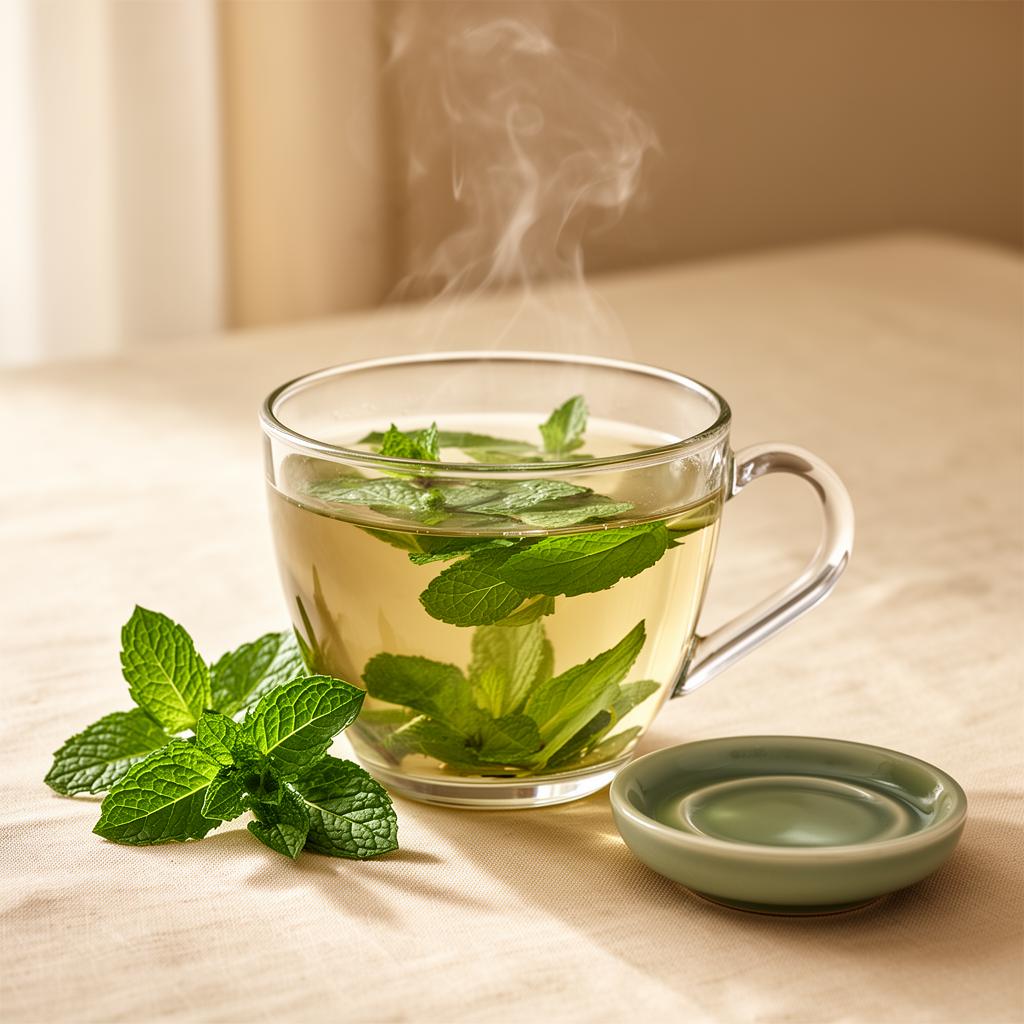
Peppermint Tea
Peppermint is the after-dinner classic for a reason. The active compound, menthol, helps relax the smooth muscle of the digestive tract — which often translates into less pressure, less cramping, and a calmer evening.
How to do it
A simple sequence anyone can follow.
- 1
Use fresh or dried
Tear 8–10 fresh peppermint leaves, or use 1 tsp of dried peppermint, or one good-quality tea bag.
- 2
Steep covered
Cover with 300 ml of just-boiled water. Lid on for 5 minutes — covering keeps the volatile oils in the cup.
- 3
Sip after the meal
Drink slowly, ideally 15–20 minutes after eating, when bloating tends to peak.
Why it works
The short, evidence-informed version.
- Peppermint oil has been shown in human trials to reduce IBS-related abdominal discomfort and bloating.
- Menthol acts on smooth muscle in the gut, helping it relax rather than spasm after meals.
- The cooling sensation itself signals 'pause' — a gentle cue to slow down and breathe.
What the research suggests
Peppermint shown to reduce IBS-related abdominal discomfort.
BMJ, 2019
Systematic review: peppermint oil safely improves IBS symptoms.
BMC Complement Med Ther, 2019
Good to know
- — If you have reflux or GERD, peppermint can sometimes worsen heartburn — try ginger tea instead.
- — Avoid in infants and very young children.